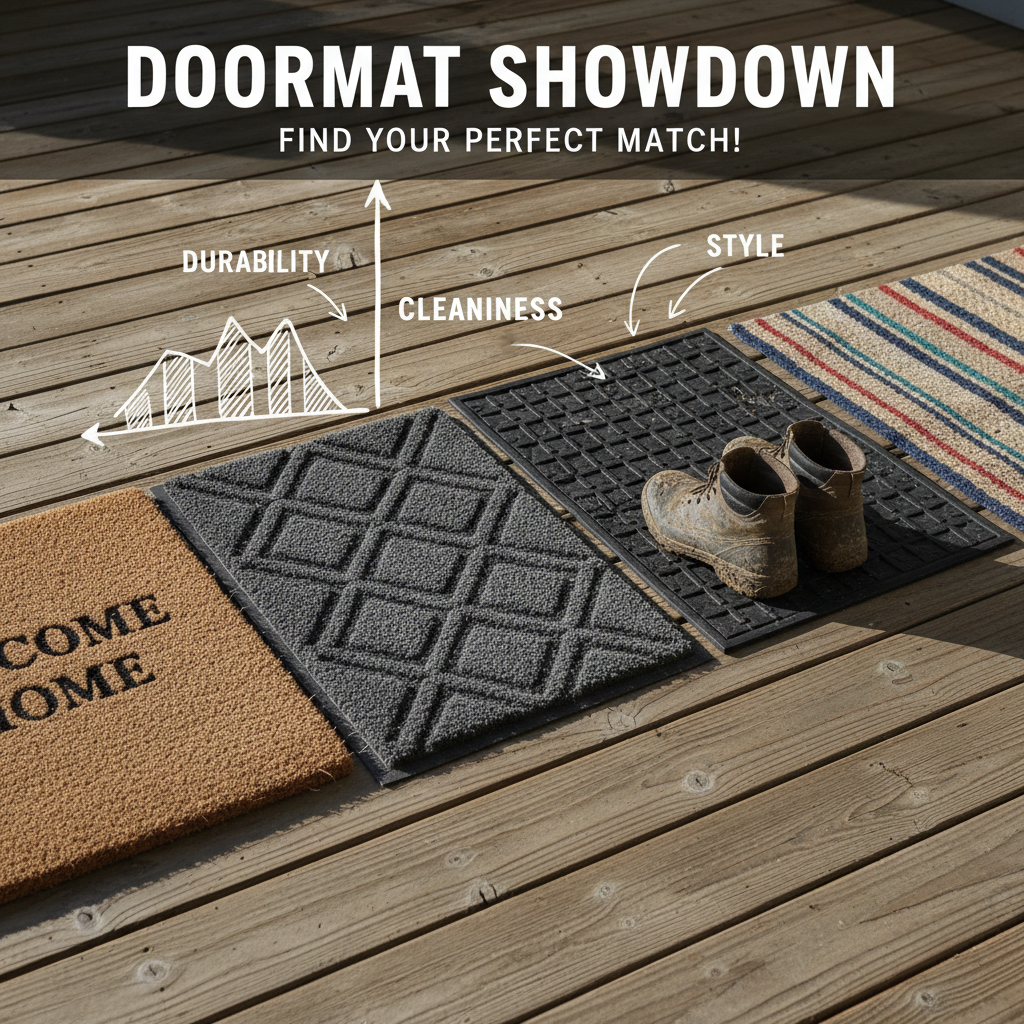
An effective doormat is the first line of defence for your home or business, trapping dirt, moisture, and debris at the entrance. But with so many materials available, choosing the right one can be overwhelming. The three most common contenders are coir, rubber, and cotton, each with unique strengths and weaknesses. Understanding their differences is key to selecting a mat that not only looks good but also performs brilliantly for your specific needs.
This comprehensive guide will compare coir, rubber, and cotton mats across several key criteria, including durability, scraping ability, water absorption, and environmental impact, helping you make an informed decision for your entrance.
The All-Natural Scraper: An Introduction to Coir Mats
Coir mats are a classic and popular choice, easily recognised by their coarse, bristly texture and natural brown hue. Derived from the husks of coconuts, coir is a strong, natural fibre that offers excellent scraping capabilities.
- Scraping Ability: The stiff, dense fibres of coir excel at removing mud, sand, and thick dirt from the soles of shoes. It acts like a brush, ensuring debris stays outside.
- Durability: Coir is a highly resilient material that can withstand heavy foot traffic, making it a reliable choice for busy entrances. However, it can shed fibres over time, especially when new.
- Aesthetics: Its rustic and natural appearance complements a wide range of architectural styles, from traditional to modern farmhouse.
- Weaknesses: Coir’s main drawback is its relationship with water. While it can handle some moisture, it can become waterlogged if perpetually damp, leading to rot and disintegration. According to a study on natural fibres, prolonged exposure to moisture can significantly reduce the mechanical properties of coir. For this reason, it’s best used in covered outdoor areas.
Best for: Outdoor or covered entryways where the primary goal is to scrape away heavy dirt and mud before anyone steps inside. For high-quality entrance solutions, explore the range at IdealMats.
The Indestructible Guardian: An Introduction to Rubber Mats
Rubber mats are the heavy-duty champions of the matting world. Made from natural, synthetic, or often recycled rubber, they are engineered for maximum durability and safety.
- Durability and Safety: Rubber is arguably the most durable matting material. It is resistant to tearing, cracking, and curling, even in extreme weather conditions. Its high-traction surface provides excellent slip resistance, a critical safety feature for commercial and residential properties. The UK’s Health and Safety Executive (HSE) notes that effective matting systems are crucial in preventing slip and trip accidents, a strength of well-designed rubber mats.
- Scraping and Cleaning: Many rubber mats feature textured patterns or raised nubs that are highly effective at scraping debris from shoes. They are also non-absorbent and incredibly easy to clean—simply hose them down.
- Eco-Friendliness: A significant advantage is that many rubber mats are made from recycled tires. This diverts millions of tires from landfills, making them a sustainable choice.
- Weaknesses: Rubber mats are not designed to absorb water; they let it drain away or sit on the surface. They can also be heavy and may have a distinct rubber odour when new, though this typically fades over time.
Best for: High-traffic commercial entrances, industrial settings, outdoor areas exposed to harsh weather, and any location where safety and durability are the top priorities. Find industrial-grade options at Specialist Mats.
The Absorbent Champion: An Introduction to Cotton Mats
Often found just inside the door, cotton mats are prized for their softness and exceptional water-absorbing capabilities. They serve a different purpose than coir or rubber, focusing on trapping fine dust and moisture.
- Water Absorption: Cotton is a highly absorbent natural fibre. It can hold a significant amount of water, making it perfect for drying shoes and preventing wet footprints from being tracked through a building. This makes them a superior choice for moisture control compared to non-absorbent materials.
- Cleaning and Maintenance: Most cotton mats are machine washable, making them the easiest of the three to keep fresh and clean. Their soft texture also feels pleasant underfoot.
- Design Versatility: Cotton can be dyed in countless colours and is perfect for printing logos and designs, offering endless customisation possibilities. This makes them a favourite for branded entrance mats.
- Weaknesses: Cotton is not a scraper. It is ineffective at removing mud or coarse debris and has low durability against heavy foot traffic. Placed outdoors, it would quickly become saturated and break down. Without a proper non-slip backing, it can also slide around on hard floors.
Best for: Indoor use, right inside the entrance, to absorb water and trap fine dust. They work best as part of a dual-mat system, paired with an outdoor scraper mat like coir or rubber. For custom designs, check out the options at Logo-Mats.co.uk.
Head-to-Head Comparison: Coir vs. Rubber vs. Cotton
To simplify your decision, here’s a direct comparison of the three materials:
| Feature | Coir Mats | Rubber Mats | Cotton Mats |
|---|---|---|---|
| Scraping Ability | Excellent | Very Good | Poor |
| Water Absorption | Poor (Can get waterlogged) | None (Allows drainage) | Excellent |
| Durability | Good | Excellent | Fair |
| Best Location | Outdoor (Covered) | Outdoor / Indoor | Indoor |
| Ease of Cleaning | Moderate (Shake or beat out) | Easy (Hose down) | Easy (Machine washable) |
| Eco-Friendliness | Very Good (Biodegradable) | Excellent (Often recycled) | Fair (High water use for non-organic) |
Elevate Your Entrance with Custom Branding
While function is crucial, a doormat is also a branding opportunity. A custom logo mat greets visitors with a professional and welcoming message before they even enter. Materials like nitrile rubber and plush synthetic fibres (often used in conjunction with a rubber backing) are perfect for displaying crisp, vibrant logos that won’t fade. Whether for a European market or a specialised UK business, a branded mat makes a powerful first impression. Explore endless design possibilities at Premier Logo Mats and Specialist Logo Mats.
Conclusion: The Right Mat for the Right Job
The “best” doormat is not a one-size-fits-all answer. The ideal choice depends entirely on your needs and the mat’s placement.
- Choose Coir for its unparalleled natural scraping ability in covered outdoor areas.
- Choose Rubber for ultimate durability, safety, and all-weather performance in commercial or demanding environments.
- Choose Cotton for its superior indoor water absorption and ease of cleaning.
For optimal floor protection, many businesses and homes use a dual-mat system: a tough scraper mat outside (rubber or coir) and an absorbent wiper mat inside (cotton or a synthetic equivalent). This combination ensures that both heavy debris and fine moisture are stopped at the door, keeping your interior floors clean, safe, and dry.