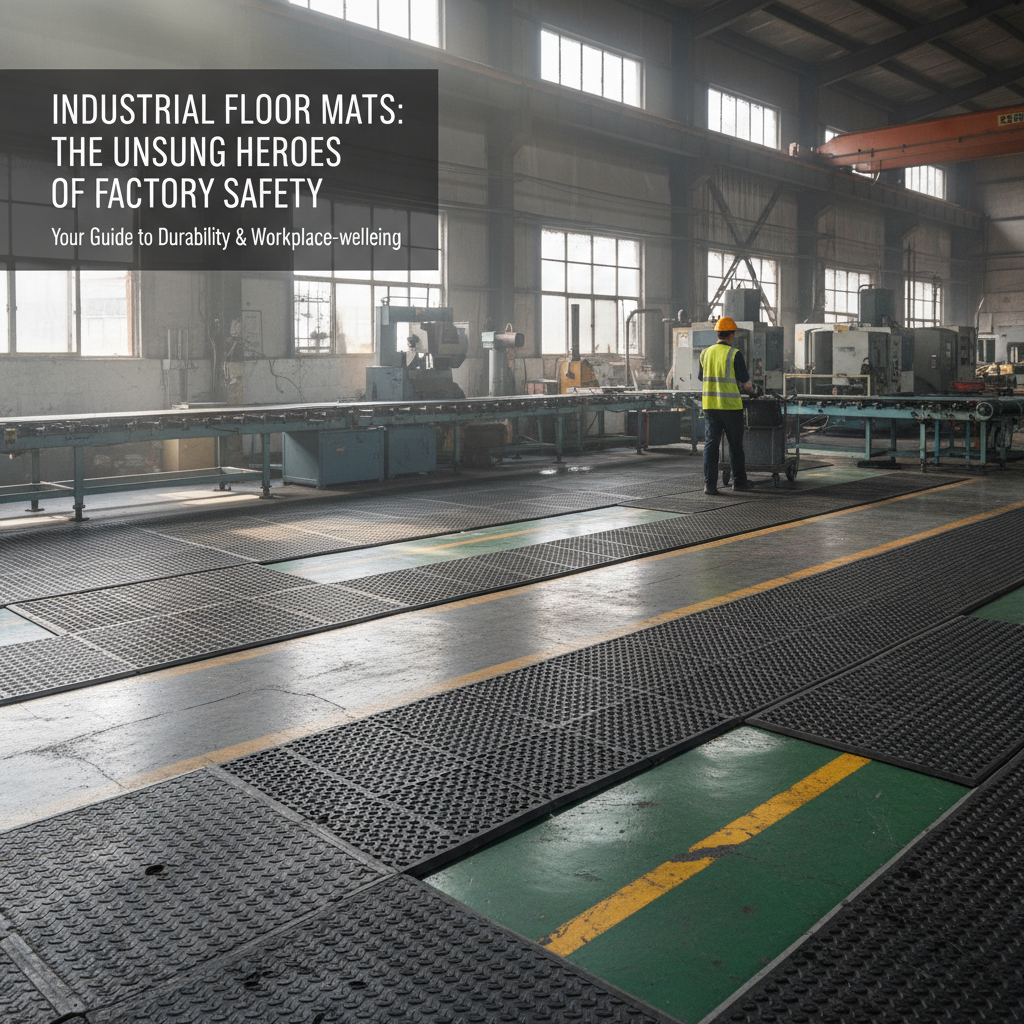
The Unseen Hazard: Why Workplace Surfaces are a Critical Safety Concern
In any industrial setting, from bustling warehouses to meticulous manufacturing floors, the most significant risks are not always the most obvious. While heavy machinery and complex processes receive plenty of attention, the simple surface underfoot is often overlooked. According to the UK’s Health and Safety Executive (HSE), slips and trips are the single most common cause of major injuries in UK workplaces, accounting for a significant portion of all reported incidents. These accidents lead to employee pain, costly downtime, and potential legal liabilities. This is where the strategic implementation of industrial floor mats becomes not just a recommendation, but a foundational element of a safe and productive environment.
Types of Industrial Floor Mats and Their Specific Applications
Choosing the right mat depends entirely on the environment and the specific hazards present. A one-size-fits-all approach is ineffective; instead, a targeted solution yields the best results. Here are the primary categories of industrial mats:
1. Anti-Fatigue Mats
Purpose: Designed for areas where employees stand for prolonged periods, such as assembly lines, packing stations, and service counters.
How they work: These mats have a cushioned construction that subtly encourages micro-movements in the leg and calf muscles. This promotes better blood flow, reducing pain and fatigue in the lower back, legs, and feet. Studies, including those cited by the Canadian Centre for Occupational Health and Safety, have shown that standing on hard surfaces can lead to significant discomfort and musculoskeletal issues. By mitigating this, anti-fatigue mats directly contribute to worker well-being and sustained concentration, leading to higher productivity.
2. Anti-Slip Mats
Purpose: Essential for areas prone to moisture, oil, or grease, such as commercial kitchens, automotive workshops, and food processing plants.
How they work: Anti-slip mats feature highly textured surfaces that create a strong grip with footwear, even when wet or oily. They are often made from nitrile rubber compounds that are resistant to degradation from oils and chemicals. Pairing these with effective drainage is a powerful combination for preventing slip-related accidents.
3. Drainage Mats
Purpose: Ideal for environments with significant liquid spillage or where frequent washing occurs.
How they work: These mats are constructed with holes and raised structures that elevate workers above the spillage. This design allows water, oils, and other liquids to flow through and away from the standing surface, keeping feet dry and dramatically reducing the risk of slipping. They are a common sight in beverage industries, food preparation areas, and industrial washing stations.
4. ESD (Electrostatic Dissipative) Mats
Purpose: Crucial for any environment where sensitive electronic components are handled, such as electronics manufacturing, server rooms, and repair centres.
How they work: ESD mats are made from materials that safely conduct static electricity away from workers and components. A sudden electrostatic discharge can destroy or damage micro-circuitry. These mats, when properly grounded, dissipate static charge at a controlled rate, protecting valuable equipment and products from irreparable damage.
5. Welding and Fire-Resistant Mats
Purpose: Specifically engineered for areas where welding, grinding, or other hot work is performed.
How they work: These mats are made from high-temperature resistant materials that can repel sparks and hot metal shards. They prevent hot materials from damaging the floor or igniting, providing a critical layer of fire safety for the operator and the facility.
The Key Benefits of Investing in Quality Industrial Matting
- Enhanced Safety and Compliance: The primary benefit is a drastic reduction in slip, trip, and fatigue-related incidents, helping businesses comply with workplace safety regulations.
- Improved Productivity: Comfortable employees are focused and efficient. By reducing physical strain, anti-fatigue matting allows workers to concentrate on their tasks for longer periods, leading to measurable output gains.
- Floor Protection: Heavy foot traffic, dropped tools, and chemical spills can ruin a floor. Industrial mats act as a protective barrier, extending the life of the flooring and saving thousands in potential repair costs. For customised and branded options that protect entrances, companies like Logo-Mats.co.uk offer robust solutions.
- Noise Reduction: The absorbent nature of rubber and foam mats can help dampen noise from machinery and foot traffic, contributing to a more pleasant and less distracting work environment.
How to Choose the Right Mat for Your Needs
Selecting the correct matting requires a careful assessment of your facility. Consider the following:
- The Environment: Is it wet, oily, or dry? Is there exposure to chemicals or extreme temperatures?
- The Task: Are employees standing still, pivoting, or moving carts over the area?
- The Traffic: How many people or vehicles will pass over the mat daily?
For a comprehensive selection of matting solutions, from general-purpose to highly specific needs, exploring a full range is key. Websites like IdealMats.co.uk provide a wide array of options suitable for many applications, while their European counterpart Premier Logo Mats serves a broader market. For more unique or heavy-duty industrial needs, turning to a Specialist Mats provider is often the best course of action. If you require a branded mat with specific technical properties, Specialist Logo Mats can fulfill those bespoke requirements.
Conclusion: A Foundation for a Safer, More Productive Workplace
Industrial floor mats are far more than just an accessory; they are an integral component of a modern, safe, and efficient workplace. By investing in the right type of matting, businesses can protect their most valuable asset—their employees—while simultaneously safeguarding their bottom line. Taking a proactive approach to floor safety reduces accidents, boosts morale, and builds a strong foundation for long-term operational success.