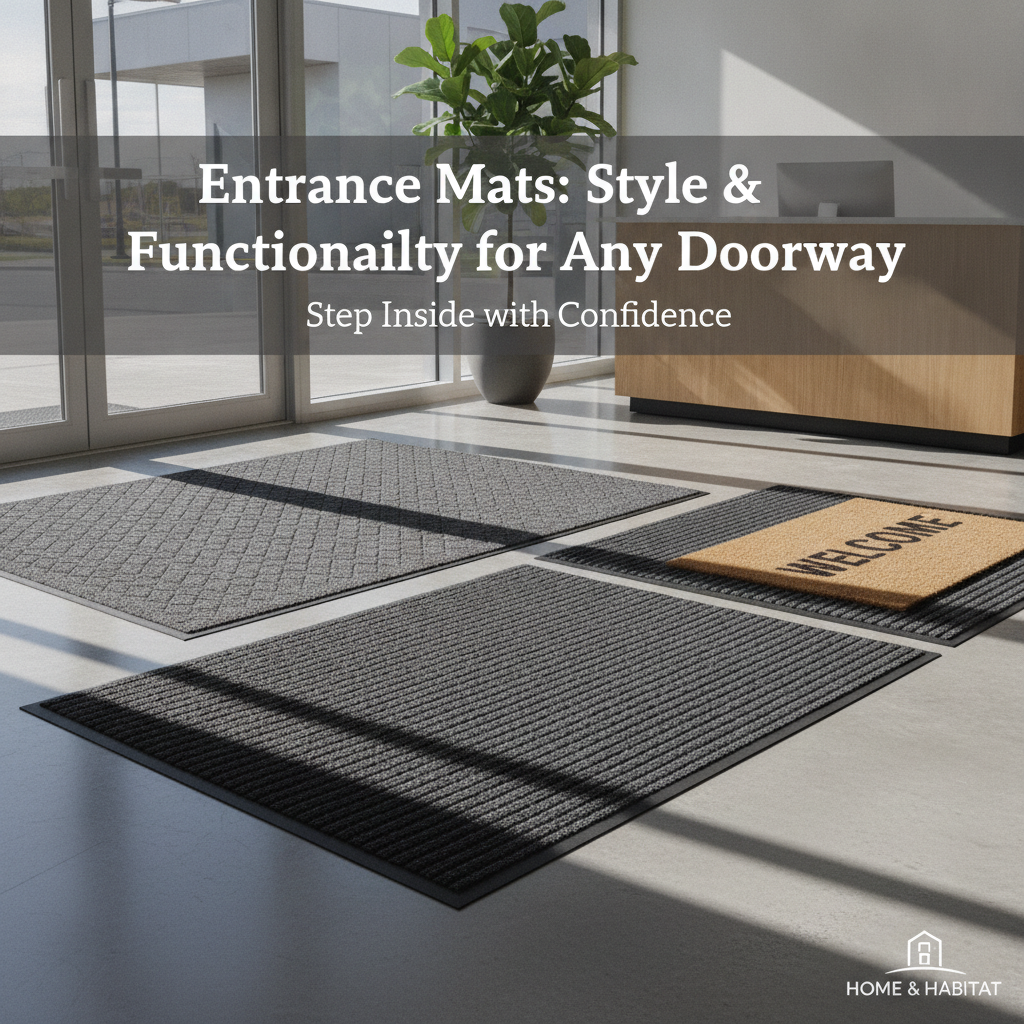
Entrance mats are often the first line of defence against dirt, moisture, and debris entering your premises. Beyond their practical function, they also contribute significantly to safety, cleanliness, and even branding. But with a plethora of materials available, how do you choose the right one for your specific needs? This comprehensive guide delves into three popular choices: coir, rubber, and cotton mats, comparing their properties, benefits, and ideal applications.
The Essential Role of Entrance Mats
Before we dive into the specifics of each material, let’s briefly touch upon why a well-chosen entrance mat is crucial for any space – commercial, industrial, or residential. A quality mat reduces slips and falls by trapping moisture, minimizes cleaning costs by preventing dirt from spreading, and enhances the aesthetic appeal of an entrance. For businesses, they can also serve as powerful branding tools. Learn more about diverse matting solutions at IdealMats.co.uk.
Coir Mats: The Natural Scraper
Coir mats are traditional, robust, and made from the natural fibres of coconut husks. Recognisable by their coarse, brush-like surface, they are renowned for their excellent scraping capabilities.
Key Characteristics & Benefits:
- Excellent Scraping Action: The stiff, coarse fibres are highly effective at removing mud, dirt, and grit from footwear, making them ideal for high-debris areas.
- Natural & Eco-Friendly: Made from a sustainable, biodegradable resource, coir mats appeal to environmentally conscious consumers and businesses.
- Aesthetic Appeal: They offer a classic, natural look that can complement various decors, particularly in residential settings or traditional commercial spaces.
- Good for Sheltered Outdoors: While natural, they perform best in sheltered outdoor areas or indoors to prevent them from becoming waterlogged.
Drawbacks:
- Limited Absorbency: Coir is not highly absorbent, meaning it won’t effectively trap large amounts of moisture.
- Shedding: New coir mats can shed fibres initially, which may require more frequent cleaning around the mat.
- Durability in High Traffic: While robust for scraping, heavy, constant foot traffic can cause them to wear down faster than synthetic alternatives.
- Mould Risk: If left consistently wet, coir can be susceptible to mould or mildew.
Ideal Applications:
Coir mats are perfect for residential doorways, light commercial entrances, and areas where a strong scraping action is needed and the mat is protected from direct, heavy rainfall. Think of them for home front doors, garden shed entrances, or as a rustic addition to a boutique entrance.
Maintenance:
Regular shaking, vacuuming, or brushing will keep coir mats clean and effective.
Reference: The Coir Board of India, “Coir Fibres,” https://coirboard.gov.in/?page_id=314 (Accessed October 26, 2023).
Rubber Mats: The Durable Protector
Rubber mats are synonymous with durability, safety, and versatility. Manufactured from natural rubber, synthetic rubber (like SBR or nitrile), or recycled rubber, they are engineered for performance in the most demanding environments.
Key Characteristics & Benefits:
- Exceptional Durability: Rubber mats are incredibly hard-wearing, resistant to tearing, abrasion, and heavy impacts, making them suitable for extreme traffic.
- Superior Grip & Safety: Their inherent anti-slip properties provide excellent traction, significantly reducing the risk of slips and falls, especially in wet conditions. Many feature textured surfaces or drainage holes for enhanced safety.
- Weather Resistance: Most rubber mats are highly resistant to water, oils, grease, and extreme temperatures, making them ideal for both indoor and outdoor use.
- Anti-Fatigue Properties: Specialized rubber mats are designed with cushioning to reduce strain and fatigue for workers standing for long periods in industrial or commercial settings. Find a range of specialist mats for these applications.
- Easy to Clean: Non-porous surfaces make them simple to clean – often just a hose down, sweep, or mop.
Drawbacks:
- Weight: Some heavy-duty rubber mats can be quite heavy and challenging to move.
- Aesthetics: While highly functional, some might find the utilitarian look of rubber less appealing for decorative purposes compared to coir or certain cotton mats.
- Initial Odour: New rubber mats, especially those made from natural rubber, can emit a distinctive smell initially.
Ideal Applications:
Rubber mats are indispensable in industrial facilities, commercial kitchens, gyms, workshops, outdoor entrances, and any area requiring superior safety, durability, and anti-fatigue support. They are also excellent for playgrounds, livestock trailers, and boat decks. For custom solutions, explore options at Specialist Logo Mats, which can also be rubber-based.
Maintenance:
Sweep, hose down, or mop with a mild detergent. For industrial settings, pressure washing may also be suitable.
Reference: Occupational Safety and Health Administration (OSHA), “Walkways and Working Surfaces,” https://www.osha.gov/laws-regs/regulations/standardnumber/1910/1910.22 (Accessed October 26, 2023).
Cotton Mats: The Absorbent Welcome
Cotton mats are primarily designed for indoor use, excelling at trapping moisture and fine dust. They typically feature a soft, absorbent cotton pile with a non-slip rubber backing.
Key Characteristics & Benefits:
- High Absorbency: Cotton fibres are incredibly effective at soaking up water, melting snow, and other liquids, keeping interior floors dry and safe.
- Excellent Dust Trapping: The soft pile traps fine dust and dirt particles that might otherwise be tracked further into a building.
- Comfort & Aesthetics: They offer a soft, welcoming feel and come in various colours and designs, blending well with indoor décor.
- Machine Washable: Many cotton mats (especially smaller ones) are machine washable, making cleaning easy and maintaining hygiene simple.
- Branding Potential: Ideal for custom designs and logos, perfect for corporate entrances to reinforce brand identity. Explore options for your business at Logo-Mats.co.uk and Premier Logo Mats.
Drawbacks:
- Slower Drying Time: Cotton absorbs a lot, but consequently, takes longer to dry than synthetic alternatives.
- Limited Scraping: Not designed for heavy scraping of mud or coarse grit; their primary function is moisture and fine dust absorption.
- Indoor Use Only: Cotton mats are not suitable for outdoor use as they can become waterlogged, heavy, and take too long to dry, potentially leading to mildew.
- Durability in Heavy Traffic: While good for moderate indoor traffic, very high traffic areas might cause the pile to flatten over time.
Ideal Applications:
Cotton mats are best suited for indoor entrances in offices, retail stores, homes, reception areas, and any location where moisture control, fine dust trapping, and a comfortable, branded welcome are priorities.
Maintenance:
Regular vacuuming and machine washing (where applicable) are recommended to maintain their absorbency and appearance.
Reference: Textile Institute, “Cotton Fibre Properties,” https://www.textileinstitute.org/about/what-are-textiles/ (Accessed October 26, 2023).
Coir vs. Rubber vs. Cotton: A Comparative Overview
To help you make an informed decision, here’s a quick comparison of the three mat types across key criteria:
| Feature | Coir Mats | Rubber Mats | Cotton Mats |
|---|---|---|---|
| Primary Function | Heavy scraping of dirt & grit | Durability, safety (anti-slip), anti-fatigue | High absorbency, fine dust trapping, branding |
| Ideal Location | Sheltered outdoor, residential/light commercial indoor | Industrial, commercial (kitchens, gyms), outdoor, heavy traffic | Indoor (offices, retail, homes) |
| Absorbency | Low | Low (but water-resistant) | High |
| Scraping Action | Excellent | Good (with textured surfaces) | Poor to moderate |
| Durability | Moderate (for light-medium traffic) | Excellent (heavy traffic, harsh conditions) | Moderate (for indoor, medium traffic) |
| Maintenance | Shake, vacuum, brush | Hose down, sweep, mop | Vacuum, machine wash |
| Aesthetics | Natural, rustic | Utilitarian, functional | Soft, inviting, customisable for branding |
| Environmental | Sustainable, biodegradable | Can be recycled (some types) | Natural fibre, but cultivation can have impact |
Choosing the Right Mat for Your Space
The “best” mat isn’t about a single material but about matching the mat to your specific needs. Consider these factors:
- Foot Traffic Volume: High-traffic areas (e.g., industrial entrances, busy retail stores) demand the extreme durability of rubber. Residential or light office entrances might be well-served by coir or cotton.
- Type of Debris: If you face heavy mud, snow, or grit, a coir mat’s scraping power is invaluable. For excessive moisture, cotton is superior indoors, while rubber excels outdoors.
- Environment: Outdoor or wet areas necessitate waterproof and durable rubber. Sheltered outdoor spaces can accommodate coir. Indoor areas benefit from cotton’s absorbency and aesthetics.
- Safety Requirements: Industrial or commercial settings often require anti-slip and anti-fatigue properties, making rubber the top choice.
- Aesthetics & Branding: If your mat needs to complement your interior design or display your company logo, cotton mats offer excellent customisation options. You can also get custom logo rubber mats from Logo-Mats.co.uk.
- Maintenance Capability: Consider how easily the mat can be cleaned and maintained in your specific environment.
Conclusion
Each mat material – coir, rubber, and cotton – brings a unique set of advantages to the table. By understanding their distinct properties, you can make an informed decision that enhances safety, cleanliness, and the overall impression of your space. Whether you need the rugged scraping power of coir, the industrial strength and safety of rubber, or the absorbent, customisable comfort of cotton, there’s a perfect mat solution waiting for you. For a comprehensive range of quality matting products tailored to your commercial, industrial, or residential needs, explore the offerings at IdealMats.