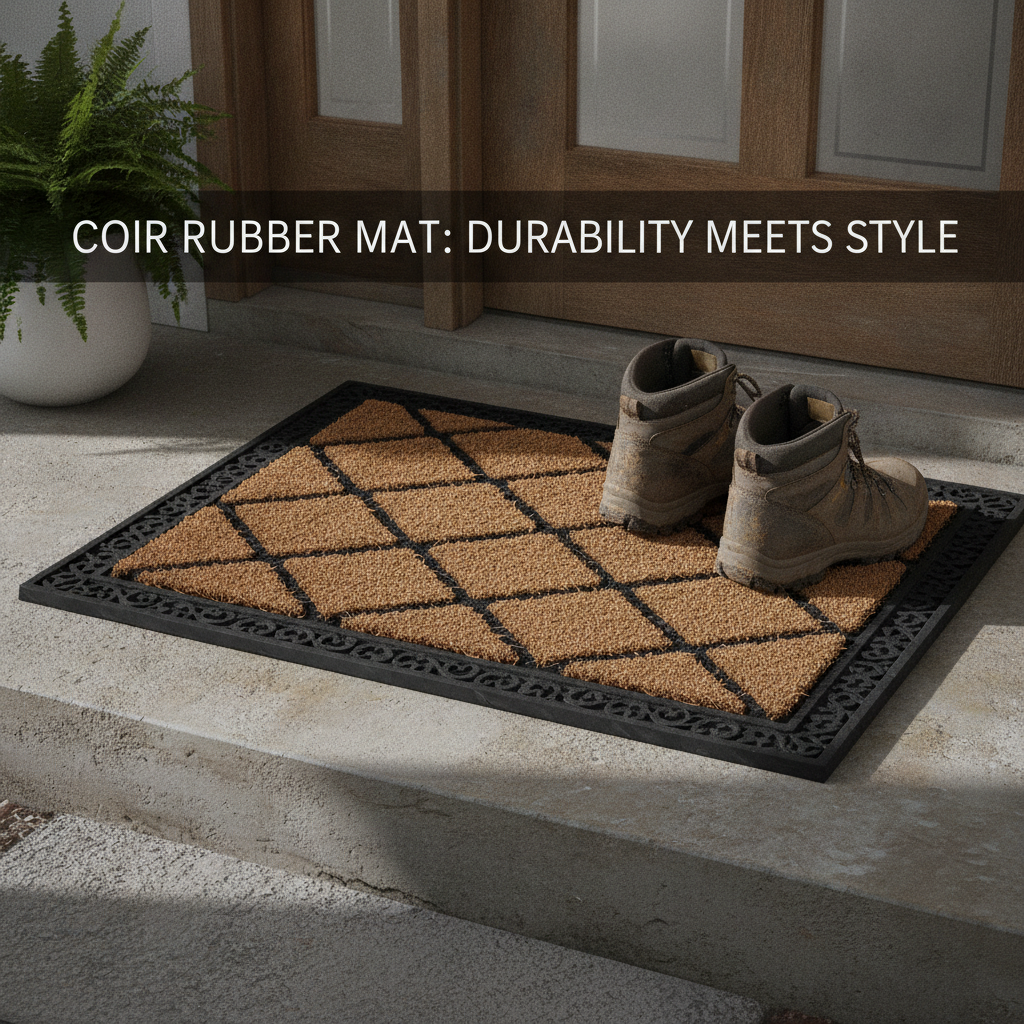
Choosing the right mat for your entrance is more than just a decorative decision; it’s a critical investment in safety, cleanliness, and the longevity of your floors. Whether for a bustling commercial space, a demanding industrial environment, or a welcoming home, the material of your mat significantly impacts its performance. This guide delves into the characteristics of three popular matting materials – coir, rubber, and cotton – to help you make an informed choice.
Understanding Your Matting Needs
Before diving into the specifics of each material, consider these factors:
- Traffic Volume: High-traffic areas require more durable and robust mats.
- Environment: Indoor, outdoor, wet, oily, or icy conditions dictate material suitability.
- Functionality: Do you need to scrape dirt, absorb moisture, prevent slips, or reduce fatigue?
- Aesthetics: Does the mat need to complement your interior design or brand image?
- Maintenance: How easy is the mat to clean and maintain?
Coir Mats: The Natural Scraper
Coir mats, often recognized by their natural, coarse appearance, are made from the fibrous material found between the hard internal shell and the outer coat of a coconut. This natural fiber is known for its excellent scraping capabilities.
Pros of Coir Mats:
- Superior Scraping: The stiff, coarse fibers effectively scrape dirt, mud, and debris from footwear, making them ideal for initial dirt removal.
- Eco-Friendly: As a natural, biodegradable material, coir is a sustainable choice.
- Aesthetic Appeal: Their rustic, natural look can complement various décors, especially in residential or eco-conscious commercial settings.
- Good for Outdoors: Coir can withstand outdoor conditions, though prolonged dampness can affect its lifespan.
Cons of Coir Mats:
- Water Retention: Coir tends to absorb and retain water, making it slow to dry and potentially prone to mildew in constantly wet conditions.
- Shedding: New coir mats often shed fibers, which may require more frequent cleaning around the mat.
- Durability: While good at scraping, coir mats are generally less durable than rubber mats in very high-traffic commercial or industrial settings.
- Maintenance: Can be challenging to clean thoroughly once deeply soiled.
Best Use Cases: Residential entrances, light commercial use, sheltered outdoor areas, and as secondary mats in a multi-mat system where heavy scraping is needed. For bespoke coir solutions, explore options at Specialist Mats.
External Resource: Learn more about coir fiber properties from sources like Wikipedia’s Coir page.
Rubber Mats: The Durable Protector
Rubber mats are celebrated for their exceptional durability, resilience, and versatility. They can be made from natural rubber (derived from rubber trees) or synthetic rubbers like nitrile, PVC, or SBR, each offering distinct advantages.
Pros of Rubber Mats:
- Extreme Durability: Rubber mats are highly resistant to wear and tear, making them perfect for heavy-traffic commercial and industrial areas.
- Slip Resistance: Most rubber mats feature textured surfaces or anti-slip backing, significantly enhancing safety, especially in wet or greasy environments.
- Weather Resistance: Excellent for outdoor use, rubber mats can withstand extreme temperatures, UV rays, and moisture without degrading.
- Easy to Clean: Non-absorbent and easy to wash, rubber mats can be hosed down, swept, or wiped clean.
- Anti-Fatigue Properties: Many industrial rubber mats are designed with cushioning to reduce strain for workers standing for long periods.
- Chemical and Oil Resistance: Specific synthetic rubber compounds (like nitrile) offer resistance to chemicals, oils, and grease.
Cons of Rubber Mats:
- Weight: Can be heavy and difficult to move, especially large industrial mats.
- Initial Odor: Some new rubber mats, especially those made from SBR, might have a temporary rubber smell.
- Aesthetics: While functional, some rubber mats may not offer the same aesthetic variety as coir or cotton for certain indoor settings.
- Cost: High-quality rubber mats, particularly those with specialized features, can have a higher upfront cost, though their longevity often makes them cost-effective in the long run.
Best Use Cases: Industrial workshops, manufacturing facilities, commercial kitchens, outdoor entrances, gymnasiums, and any area requiring superior grip, durability, and anti-fatigue properties. For robust rubber matting solutions, visit Ideal Mats and Specialist Mats.
External Resource: Read more about the properties and uses of rubber in matting from industrial safety material suppliers or research journals on polymer science.
Cotton Mats: The Absorbent Welcome
Cotton mats are primarily known for their exceptional absorbency and soft texture, making them a popular choice for indoor environments where moisture control and comfort are key.
Pros of Cotton Mats:
- High Absorbency: Cotton fibers are excellent at soaking up moisture, making them highly effective at trapping wetness from shoes.
- Soft & Comfortable: Provides a softer surface underfoot, which is pleasant for indoor use.
- Machine Washable: Many cotton mats are designed to be machine washable, offering easy and thorough cleaning, an advantage for hygiene.
- Good for Fine Dust: Beyond moisture, cotton can also effectively capture fine dust and dirt particles.
- Aesthetic Versatility: Available in a wide range of colors and designs, easily matching interior décor. Can also be branded as logo mats through providers like Logo Mats or Premier Logo Mats.
Cons of Cotton Mats:
- Slower Drying: Due to their high absorbency, cotton mats can take longer to dry, especially if heavily saturated.
- Less Scraping Power: Not as effective as coir or rubber at scraping off heavy, caked-on mud or debris.
- Durability: While durable for indoor use, cotton mats are generally less robust than rubber for extremely high-traffic or outdoor conditions.
- Staining: Can be prone to staining if not cleaned promptly after spills.
Best Use Cases: Indoor office entrances, retail stores, residential bathrooms and kitchens, reception areas, and anywhere high absorbency and a pleasant appearance are desired. Explore branding opportunities with Specialist Logo Mats for cotton mats.
External Resource: Information on cotton fiber properties and absorbency can be found through textile industry associations or academic research on natural fibers.
Coir vs Rubber vs Cotton: A Quick Comparison
| Feature | Coir Mats | Rubber Mats | Cotton Mats |
|---|---|---|---|
| Primary Function | Scraping dirt/debris | Durability, grip, anti-fatigue | Moisture absorption, fine dirt |
| Durability (High Traffic) | Medium | Very High | Medium |
| Water Absorption | High (retains) | Very Low (repels) | Very High (absorbs) |
| Drying Time | Slow | Fast | Slow |
| Slip Resistance | Medium | Very High | Medium (when dry) |
| Maintenance | Shake/Vacuum | Hose/Wipe | Machine Wash/Vacuum |
| Best Environment | Sheltered Outdoor/Indoor | Outdoor/Indoor (heavy-duty) | Indoor |
| Aesthetics | Natural, Rustic | Functional, Modern | Versatile, inviting |
Making the Right Choice for Your Space
The “best” mat isn’t a one-size-fits-all answer; it depends entirely on your specific requirements. Here’s a simplified guide:
- For Heavy Scraping & Natural Look: Coir mats are excellent for removing stubborn dirt, especially in residential or light commercial settings with a natural aesthetic.
- For Extreme Durability & Safety: Rubber mats are unparalleled in high-traffic commercial and industrial environments, offering superior grip, weather resistance, and often anti-fatigue benefits.
- For High Absorbency & Indoor Comfort: Cotton mats excel at trapping moisture and fine dust indoors, providing a soft, easy-to-clean solution for offices, retail, and homes.
Often, the most effective solution is a combination of mats – a coir mat outside for heavy scraping, followed by a cotton or rubber mat inside for finer dirt and moisture absorption. This multi-zone approach, often advocated by experts in floor protection, ensures comprehensive cleanliness and safety.
Conclusion
Whether you prioritize scraping power, robust durability, or superior absorbency, understanding the unique attributes of coir, rubber, and cotton mats is crucial. By aligning your choice with the specific demands of your environment, you can enhance safety, maintain cleanliness, and prolong the life of your flooring. Explore the extensive range of matting solutions available at trusted providers like Ideal Mats and Specialist Mats to find the perfect fit for your business or home.